Sir Christopher Wren
Education & Interests
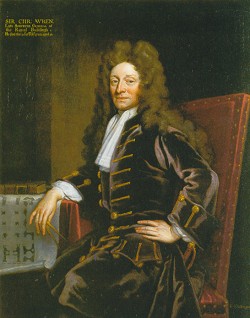 Christopher Wren was born in 1632 in England. He had a private tutor; his father also participated in his early education. He attended Wadham College in 1649 as a Gentlemen Commoner - this meant that he paid higher fees. Just before the Great Fire of London he traveled to Paris and studied architecture. During his studies, Wren focused on scientific thinking, working models, diagrams and charting; these were all to prove useful in his career as an architect.
European Influences
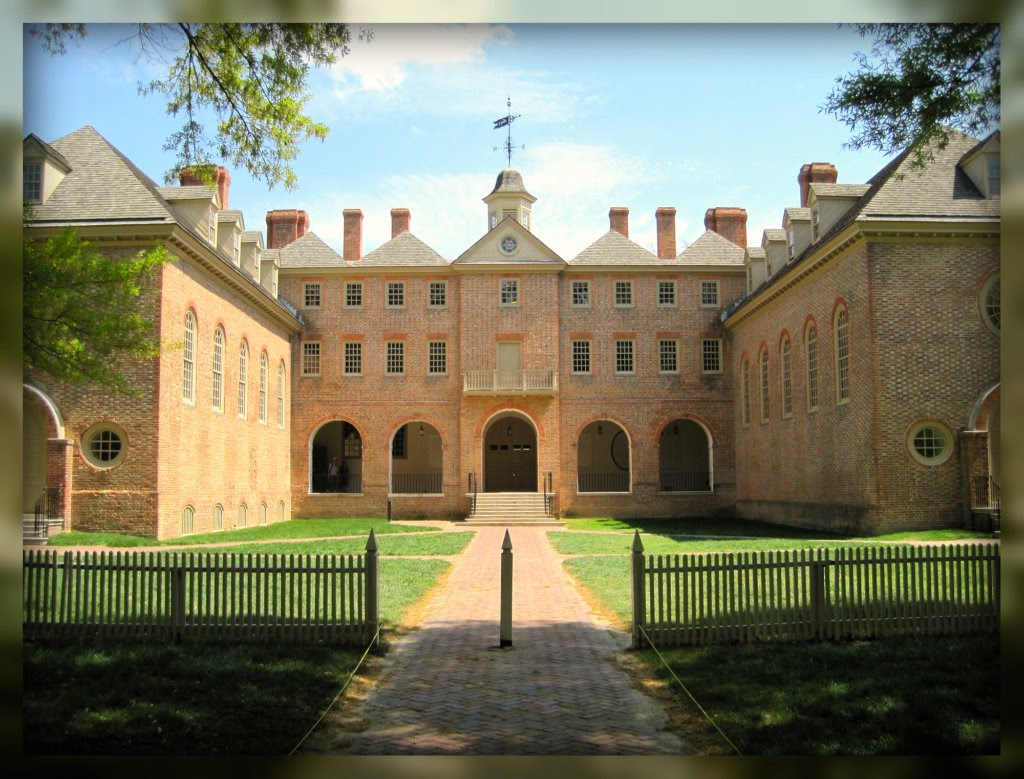 Christopher Wren examined classical architecture or 1st century Roman architecture as well as French Baroque architecture. He had the pleasure to meet the great Italian architect Gianlorenzo Bernini while in Paris. He combined these styles of architecture to create great structures within the United Kingdom.
Contributions to the City of London
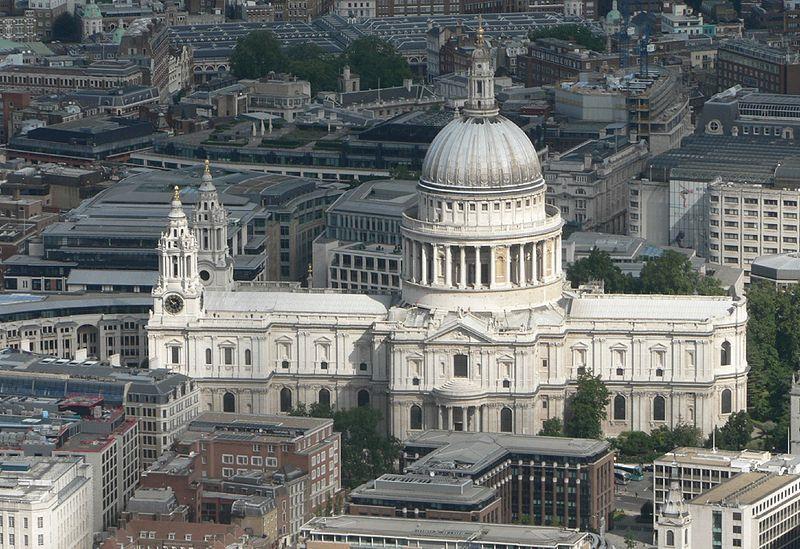
Christopher created nine great buildings in London from 1670 to 1715, during the rebuilding after the Great Fire. He is actually credited with a far greater number, but he is directly responsible for these great structures. These include St. Paul’s Cathedral, Greenwich Hospital, and St. Nicholas Cole.
Wren had a chance to present a plan to rebuild the city, although it was not used during the rebuilding. In 1669, however, Charles II appointed Wren the Surveyor General of the King’s Works. The position put him in control of all work on the royal palaces! In 1673, he resigned and was knighted. Christopher Wren’s contributions to the United Kingdom were substantial, designing and supervising the creation of great structures within his nation.
Awards
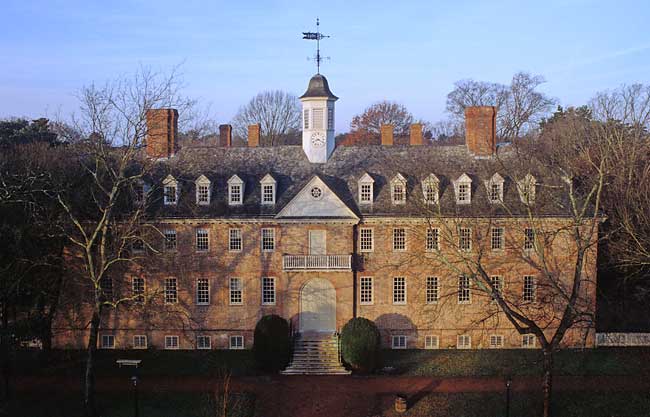 In addition to the architectural stamp he left on England, he was also trained as a mathematician and scientist and his works were praised by some other great minds like Sir Isaac Newton and Blaise Pascal. He was an inventor, creating things like a transparent beehive, he made modifications to the spyglass or telescope and a tool to write in the dark with.
Sir Christopher Wren died in 1723.